
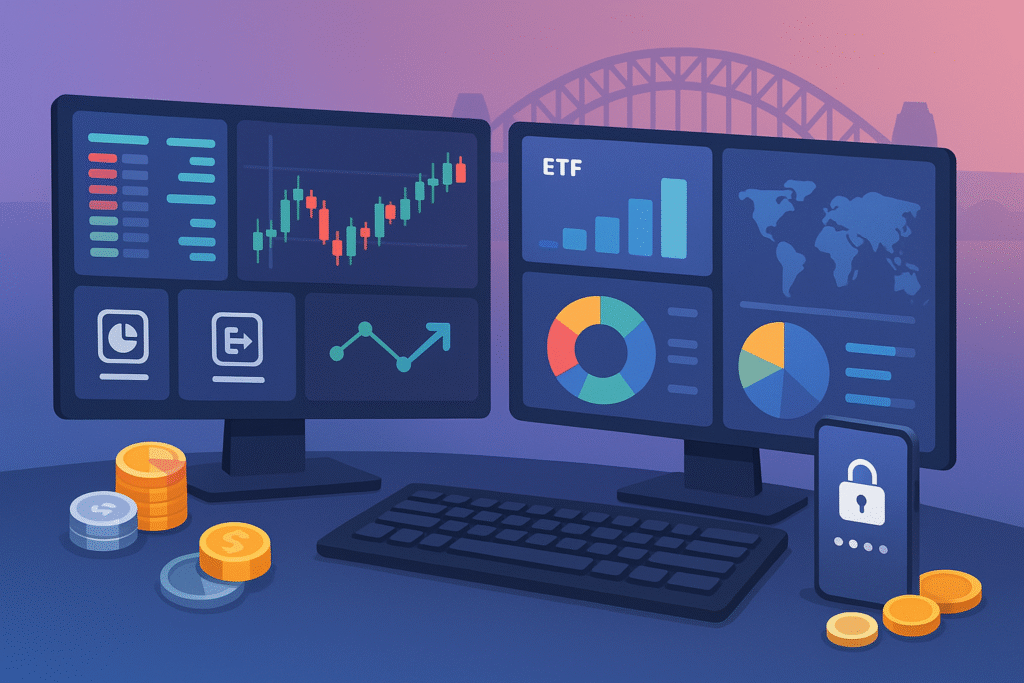
When you click “Buy” on an Australian trading platform, a complex architecture springs into action. At the user layer, you interact with a web app or mobile client. These front ends manage authentication (2FA, biometrics), local validation (tick size, price bands), and order tickets that capture instructions like time-in-force and trigger thresholds. Some active-trader desktops expose hotkeys, staged orders, and multiple ladders for depth trading.
Once submitted, the platform’s order management system (OMS) and execution management system (EMS) take over. These systems normalize your instruction, run pre-trade risk checks (e.g., fat-finger limits), and forward orders via FIX or proprietary protocols. Brokers that support direct market access (DMA) route your order with minimal internal handling; others may use internalization or smart order routing across ASX and Cboe Australia, hunting for liquidity and price improvement.
Market data is a separate pipeline. Level I feeds provide best bid/offer and last trade; Level II unlocks market depth, essential for gauging order book pressure in thinly traded names. Serious platforms cache historical intraday data for backtesting and provide time-and-sales, imbalance indicators near auctions, and statistics like VWAP. Charting engines—often licensed from firms like Iress or integrated from TradingView—render these streams with overlays (moving averages, RSI, MACD), custom studies, and drawing tools. Some brokers expose WebSocket streams and REST endpoints so quants can script strategies in Python or connect through FIX to external algos.
After execution, the back office handles trade allocation, confirmations, and settlement. In Australia, settlement is typically T+2, with the CHESS system recording ownership transfers. If your account is CHESS-sponsored, trades settle to your personal HIN; in custody models, the nominee’s HIN reflects holdings, and the platform maintains sub-ledgers of client entitlements. Corporate actions—dividends, DRPs, rights issues—flow from registries to the broker, which relays elections and postings to clients.
Security and compliance weave through the entire flow: encryption in transit and at rest, device fingerprinting, IP and behavior anomaly detection, and audit trails for every order event. Brokers operate under AFSL oversight and meet ASIC reporting obligations. Position limits, margin calculations, and stress tests run continuously, while AML and KYC checks are embedded at onboarding and when cash movements occur.
Usability features can be the difference between a capable and a delightful platform. Searchable corporate actions, tax-time reports with CGT parcels and franking credit summaries, portfolio analytics that categorize by sector and factor, and alerting that triggers on price, volume spikes, or news headlines all elevate the experience. Add-on modules might include options chains for ASX equity options, ETF screeners with distribution histories, and ESG scoring for listed names.
Australians also increasingly want global reach: US, Europe, and Asia listings, supported by multi-currency wallets and competitive FX. Custody brokers often excel here, but many CHESS-sponsored providers now pair domestic HIN holdings with an international custody arm, creating a hybrid model. For builders and tinkerers, API access, paper trading, and sandbox data reduce risk as you prototype strategies before committing real capital.




More Stories
Australian Commodity Stocks in 2026: How Iron Ore, Gold and Lithium Shape Investor Returns
Why Australia’s 12% Superannuation System Is Becoming a More Powerful Investment Engine in 2026
Australian Dividend Stocks in 2026: Still Worth Holding for Long-Term Investors Seeking Income?