
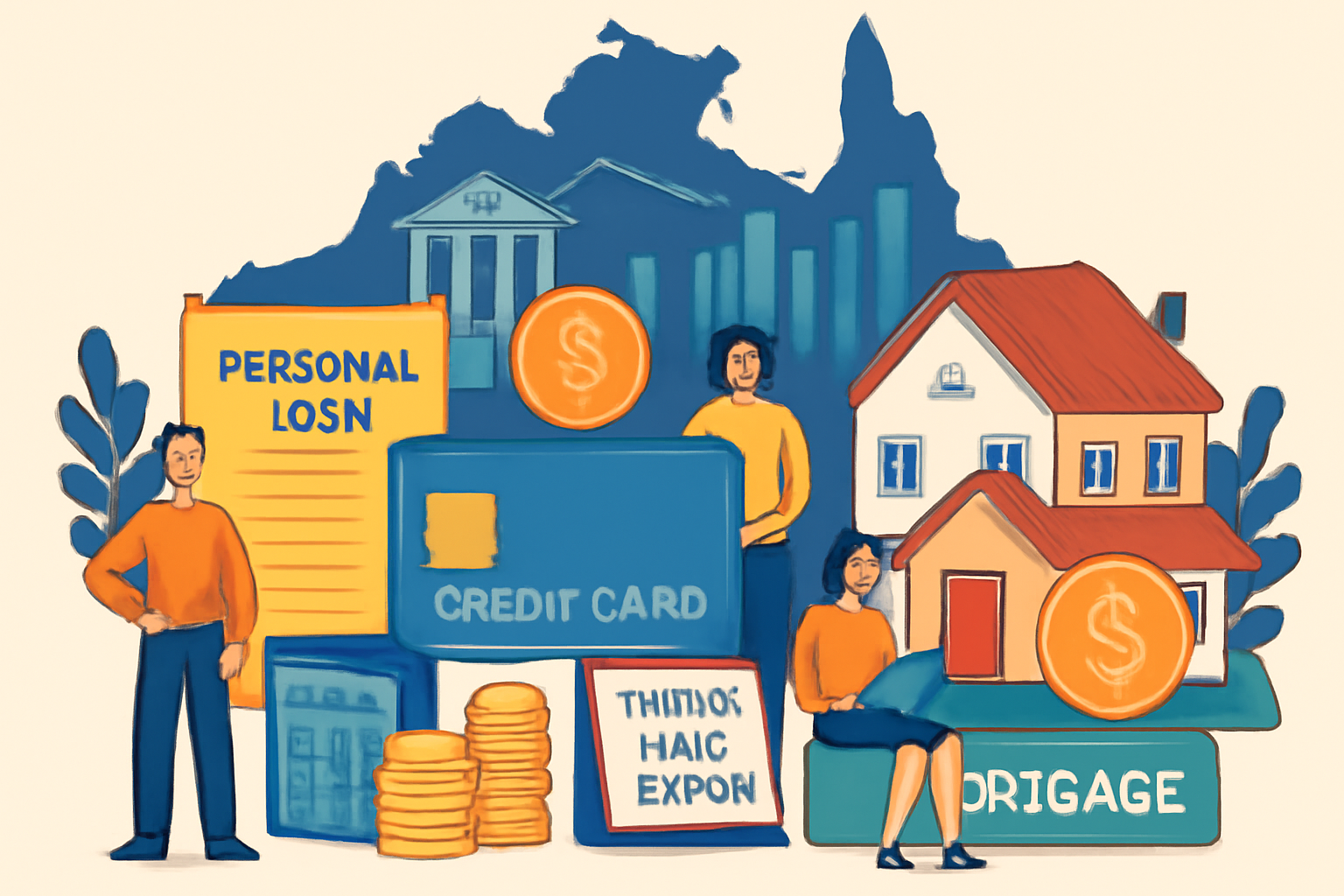
Australia’s credit market provides a wide range of financial products, helping individuals manage their finances, buy homes, and meet personal goals. Consumer financing, which includes personal loans, credit cards, and other borrowing methods, is crucial in helping Australians navigate their financial obligations. In addition, the mortgage sector serves as the foundation for homeownership in the country, making it an essential aspect of the economy.
The Role of Consumer Financing
Consumer financing is one of the most common ways Australians manage their day-to-day finances. It includes various credit products such as personal loans, credit cards, and newer services like buy-now-pay-later (BNPL) schemes.
Personal loans in Australia are typically unsecured loans that borrowers use for various purposes, from debt consolidation to purchasing goods and services. These loans offer fixed interest rates and repayment schedules, which allow borrowers to plan their finances and pay down debt over time.
Credit cards are another form of consumer credit that offer immediate purchasing power. While convenient, credit cards can be costly if not managed well, due to high-interest rates and fees. They are widely used for both everyday purchases and large expenses, but it’s important for borrowers to pay off the balance in full to avoid interest charges.
BNPL services have gained significant traction in Australia, particularly among younger demographics. Companies like Afterpay, ZipPay, and Klarna allow consumers to split payments into interest-free installments. This can be an attractive alternative to traditional credit, but it requires careful management to avoid falling into debt.
Mortgages in Australia
The mortgage market is another critical aspect of Australia’s credit sector, providing the necessary funding for home purchases. Australian mortgages typically come in two types: fixed-rate and variable-rate loans. Fixed-rate mortgages offer borrowers a set interest rate for the life of the loan, ensuring consistent monthly payments. Variable-rate mortgages, on the other hand, can fluctuate with market conditions, which may result in lower repayments during times of low interest rates, but also an increase if rates rise.
In addition to these traditional mortgage products, there are government programs aimed at making homeownership more accessible for first-time buyers. These programs offer reduced deposit requirements and sometimes financial assistance to help ease the barriers to entering the housing market.
Government Regulation and Protection
The Australian credit sector is heavily regulated to ensure that financial institutions act responsibly and that consumers are protected. The Australian Securities and Investments Commission (ASIC) is responsible for overseeing the provision of consumer credit, ensuring that financial products are transparent and that lenders are clear about the terms and conditions of their products.
In addition, the Australian Prudential Regulation Authority (APRA) monitors financial institutions to ensure their stability and protect consumers. Together, these regulatory bodies maintain a balanced and fair credit environment, encouraging responsible lending practices.
Challenges and Innovations in the Credit Sector
The Australian credit sector is constantly evolving, with new technologies and services making their mark on the market. Digital lending platforms and fintech companies have made it easier than ever to access loans and credit, with many offering streamlined online applications and quick approval processes. This has led to a greater range of options for consumers, as well as increased competition among lenders.
At the same time, regulators are keeping a close eye on the sector to address emerging challenges. With the growth of BNPL services, for instance, regulators are focused on ensuring these products are not contributing to unsustainable levels of consumer debt.




More Stories
Insights into Australia’s Top Banks: Commonwealth Bank, ANZ, and Westpac
Rates, Cycles, and Portfolio Positioning in Australia: Equity and Bond Ideas to Follow
Investment in Australia: A Deep Dive into Financial Market Risks and Rewards