
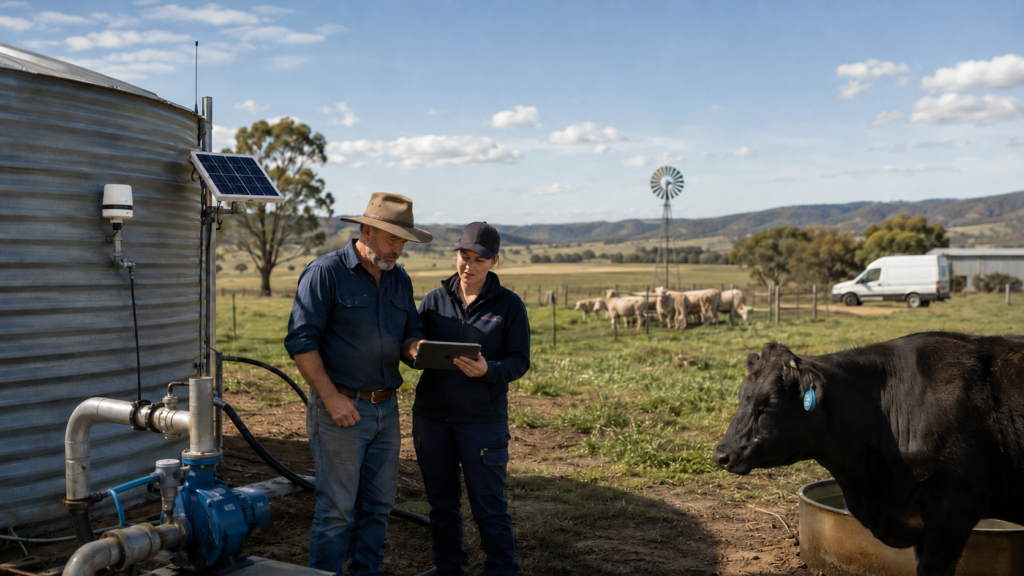
Australian small and medium-sized enterprises are entering 2026 under pressure to improve productivity without significantly increasing payroll costs. This environment creates a strong opening for technology-focused SMEs offering artificial intelligence automation, industry-specific software, and affordable digital transformation services.
The most attractive opportunities are not necessarily found in building large consumer applications. For smaller operators, the stronger commercial path may involve solving one expensive and repetitive problem for a clearly defined Australian industry.
Why AI Adoption Creates Room for Smaller Providers
Many Australian businesses already use cloud accounting, digital payments, online booking systems, and customer relationship management platforms. However, these systems are often disconnected. Employees may still copy information between spreadsheets, manually respond to routine enquiries, or prepare reports using several different platforms.
Technology SMEs can address these inefficiencies through AI-enabled workflow automation. Examples include systems that classify incoming emails, generate preliminary quotations, schedule appointments, summarise customer interactions, or identify overdue invoices.
A small technology provider does not need to compete directly with global AI companies. It can instead build implementation services around existing platforms and adapt them to local operating conditions, industry terminology, privacy requirements, and customer expectations.
High-Potential Industry Niches
Professional services firms are an accessible market because accountants, migration advisers, property managers, and independent legal practices handle large volumes of documents and recurring enquiries.
Construction and trade businesses represent another opportunity. An AI workflow could transform site notes into job summaries, prepare draft estimates, monitor supplier correspondence, or remind clients about approvals.
Healthcare administration also presents potential, provided providers follow strict privacy and security standards. Clinics may need assistance with appointment communication, non-clinical documentation, inventory monitoring, and patient enquiry routing.
Micro-SaaS as a Practical Business Model
Micro-SaaS refers to a narrowly focused subscription software product operated by a small team. In Australia, a micro-SaaS company could build a compliance reminder platform for childcare centres, a maintenance scheduling tool for strata managers, or a quotation system designed for solar installers.
This model can generate recurring revenue while keeping product scope manageable. The main commercial advantage comes from specialisation. A platform designed around the language and workflow of one sector may be more valuable than a broad system requiring extensive customisation.
Pricing could combine a monthly subscription with onboarding, data migration, training, and support fees. This approach provides predictable income while creating additional service revenue.
Government-Supported Digital Capability
The Australian Government’s Digital Solutions program has provided small businesses with access to digital advice, workshops, and support services. Technology entrepreneurs can use the program’s focus areas to better understand common SME needs, including online security, business software, digital marketing, and technology adoption.
Official reference: Digital Solutions – Australian Small Business Advisory Services
A Realistic 2026 Market-Entry Strategy
A practical entry strategy is to select one industry, interview at least 15 business owners, and identify a task that consumes measurable time every week. The first product should automate a limited workflow rather than attempt to replace an entire business system.
Trust will be critical. Providers should clearly explain where customer data is stored, which AI models process the information, and when human review remains necessary.
The strongest Australian technology SMEs in 2026 may not be those promising the most advanced AI. They are more likely to be businesses that convert accessible technology into reliable, industry-specific productivity improvements.



More Stories
How Australian Family Businesses Can Protect Their Legacy While Expanding in 2026
Australia’s 2026 Sustainable Startup Shift: How Circular Business Models Are Rewriting the Rules of Growth
How Australian MSMEs Can Manage Risk Through Smarter Planning