
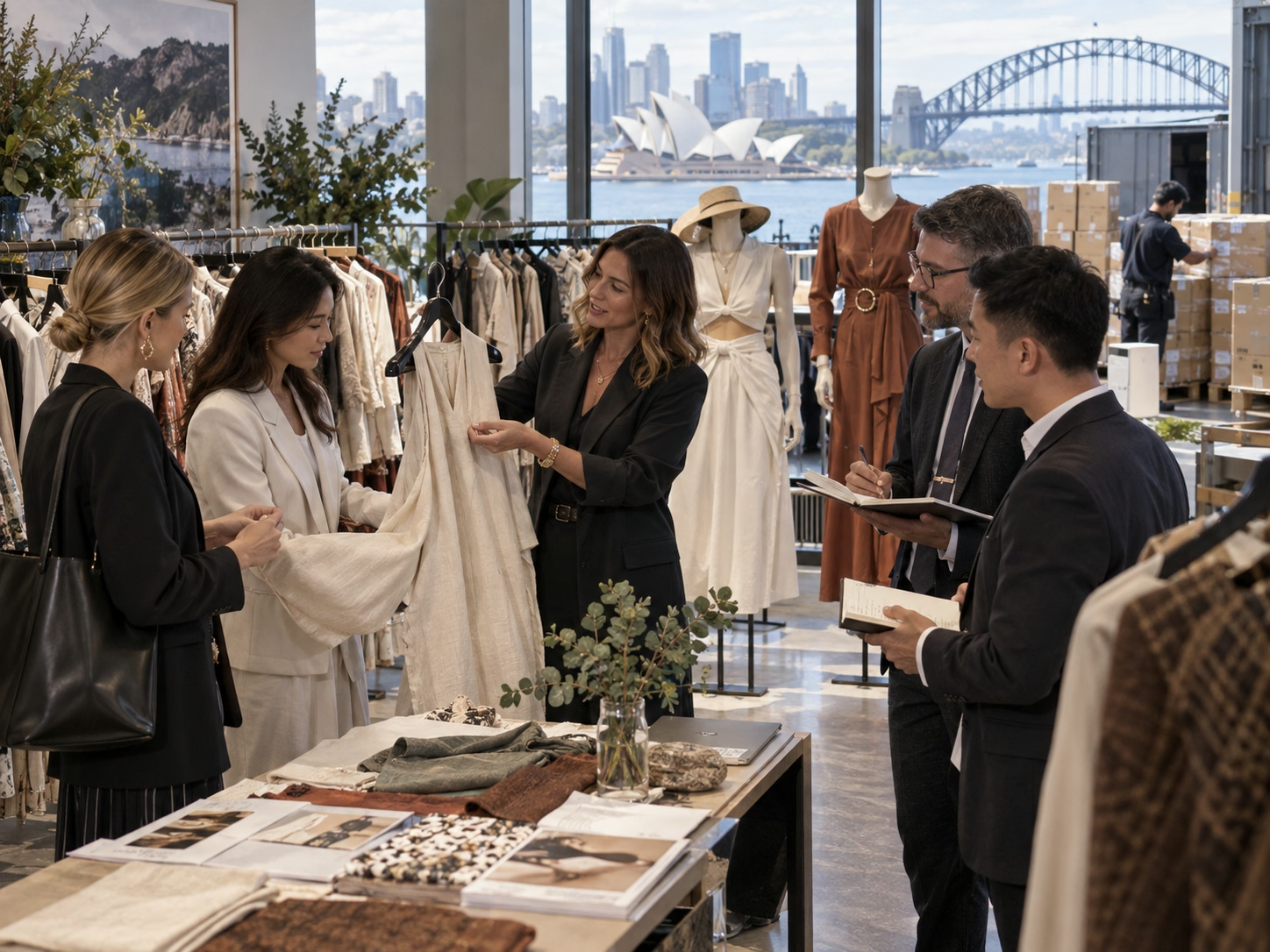
The New Wave of Australian Fashion Exporters
While established luxury labels like Zimmermann and Aje built their global reputations through traditional wholesale channels and physical retail, a new generation of Australian fashion brands is achieving international scale through fundamentally different mechanisms. These digital-first companies are leveraging social media, influencer partnerships, and direct-to-consumer e-commerce to bypass the traditional barriers that once made global expansion prohibitively expensive.
Tiger Mist: From Melbourne Label to Global Platform
Tiger Mist exemplifies this transformation. Founded as a Melbourne-based label, the brand has evolved into what its head of e-commerce and digital, Dominique Moretti, describes as “an international fashion platform with growing traction in the United States”.
The brand’s recent collaboration with influencer Em Venz sold out within three minutes of launch for Volume One, with Volume Two also performing strongly. Moretti attributes this success to a product strategy centred on exclusivity and in-house design: “We’re not a wholesale company. We don’t stock other brands. It’s only our own brands. Everything is unique and exclusive to us”.
Tiger Mist now operates offices in Melbourne, Los Angeles, and Byron Bay, and has expanded its digital capabilities to include a proprietary app launched in February 2026 and live shopping trials on TikTok.
The “Aussie Style” Phenomenon
The global appetite for Australian fashion isn’t merely a function of individual brand strategies—it reflects a broader cultural moment. Searches for “Aussie style” increased by 14 per cent in a recent month, with over 9,000 searches globally as consumers worldwide seek to capture the Australian aesthetic.
This cultural tailwind has benefited brands like White Fox Boutique, which has gone viral internationally, and Leo Lin, the Sydney-born luxury label that reported 334.2% sales growth in Europe between FY25 and FY26, alongside persistent growth across the US and Middle East.
Leo Lin: Digital Meets Physical in London
Leo Lin’s expansion strategy illustrates how digital-first brands are now integrating physical retail experiences into their growth playbooks. The brand opened its first-ever UK pop-up at Harrods in July 2026, showcasing its Pre-Fall and Fall-Winter 2026 collections in a space inspired by vintage European cinema and 1960s French film.
Harrods’ head of buying, Clemmie Harris, noted that Leo Lin “has gone from strength to strength at the department store, and continues to resonate with its customer base through its approach to occasionwear”. The brand now manages over 150 stockists globally, with its strongest presence in North America.
The Direct-to-Consumer Advantage
What unites these digital-first brands is their control over the customer relationship. By selling primarily through their own e-commerce platforms and apps, they capture valuable data, maintain pricing integrity, and build direct connections with consumers that traditional wholesale models cannot replicate.
This approach has proven particularly effective in the US market, where Australian brands’ transeasonal aesthetics—designed to work across hemispheres—give them a unique advantage over northern hemisphere competitors whose collections are tied to seasonal calendars.
Technology as an Export Enabler
The infrastructure supporting this digital-first expansion has matured significantly. Platforms like Klaviyo enable sophisticated customer journey automation, with Tiger Mist operating 16 to 17 automated flows across email, SMS, and push notifications to target customers “at the right time”. TikTok Shop and live shopping capabilities provide new discovery and conversion channels that bypass traditional retail gatekeepers entirely.
The Scalability Question
The challenge for digital-first Australian brands is transitioning from viral moments to sustained international growth. The brands that succeed will be those that can maintain product innovation, manage supply chain complexity across multiple markets, and build brand equity that transcends individual influencer collaborations. Tiger Mist’s expansion into physical retail offices and its emphasis on in-house design suggest a recognition that digital virality alone is insufficient for long-term global success.

More Stories
Local Legends: How Australian Media is Defending Domestic Content Against Global Giants
Inside Australia’s Changing Food and Beverage Sector: Functional Drinks, Smart Manufacturing, and Local Sourcing
Outback Vertical Farms and Solar Desalination: Australia’s Unlikely Agribusiness Revolution