
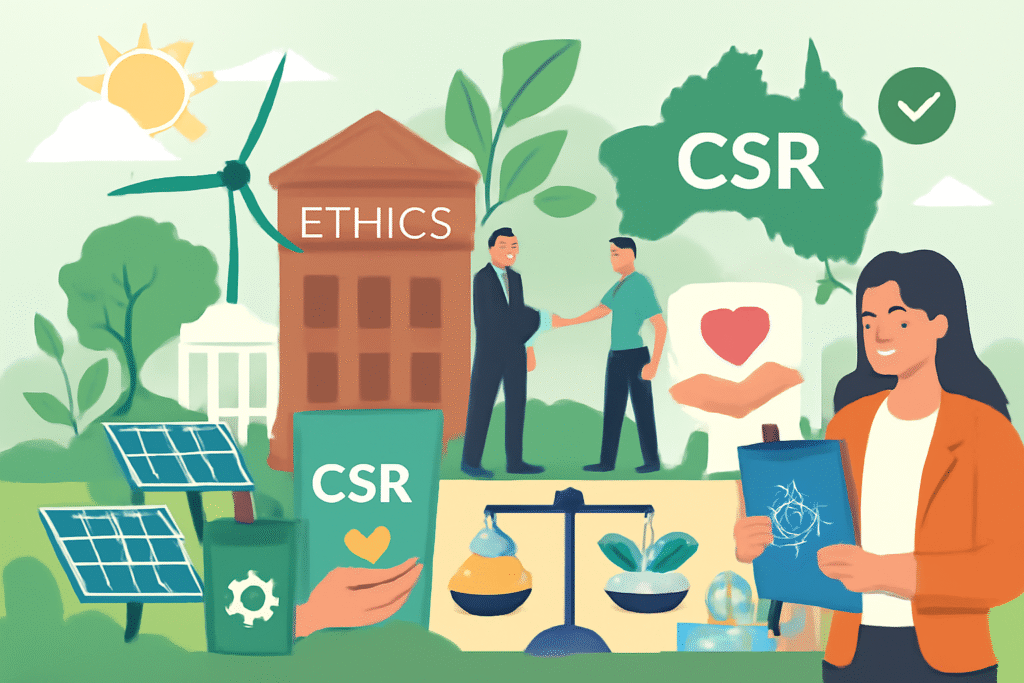
Australia’s business environment is increasingly shaped by the integration of sustainability and ethical business practices. Corporations in the country are under significant pressure to adopt policies that ensure both their operations and their supply chains are aligned with ethical and environmental standards. In the face of growing public and regulatory scrutiny, many businesses are working to create corporate policies that prioritize social responsibility and sustainability, all while ensuring they remain competitive and profitable.
A central aspect of corporate governance in Australia is the adherence to various sustainability regulations. Australia has introduced several policies to help businesses reduce their environmental impact, including the Carbon Pricing Mechanism and the Clean Energy Finance Corporation. These initiatives provide incentives for businesses to invest in renewable energy solutions and reduce their carbon footprints, while also promoting innovation in green technologies. The government encourages businesses to take active steps towards reducing emissions and using energy-efficient practices.
In parallel, ethical business practices in Australia are underpinned by legal frameworks designed to ensure fairness, transparency, and accountability. The Corporations Act 2001, along with guidelines from regulatory bodies such as the Australian Competition and Consumer Commission (ACCC), outlines the expectations for corporate behavior, focusing on consumer protection, financial integrity, and corporate transparency. Companies are required to maintain ethical business standards in all their dealings, from product safety to advertising practices and financial disclosures.
The concept of corporate social responsibility (CSR) has gained significant traction in Australia, with companies increasingly adopting CSR initiatives that focus on creating positive social and environmental impact. Many Australian companies are taking part in programs that benefit local communities, such as supporting education initiatives, providing disaster relief, or contributing to conservation efforts. These actions not only benefit society but also enhance the reputation and credibility of businesses, contributing to consumer loyalty and positive brand image.
For Australian corporations, adopting ethical and sustainable practices is not only about complying with regulations—it’s also about building a long-term relationship with their stakeholders. Investors are increasingly looking to support companies that demonstrate a commitment to environmental and social issues, and companies that fail to meet these expectations may struggle to attract investment. By embracing sustainability and ethics, businesses can improve their ESG (Environmental, Social, Governance) ratings, which can result in greater investor confidence and better access to capital.
As ethical practices and sustainability become more deeply embedded into corporate policies, Australian companies are also paying closer attention to how they manage their supply chains. Ethical sourcing, ensuring fair labor practices, and reducing environmental harm are now critical considerations for businesses looking to align with global best practices. Australian companies are increasingly working with suppliers who share similar values around sustainability, transparency, and human rights.
Through these efforts, Australian companies are setting an example for others to follow. Corporate policies that embrace sustainability and ethics have become a critical part of doing business in the country. As global awareness around environmental and social issues continues to grow, Australian businesses will likely remain at the forefront of developing responsible and ethical business practices.




More Stories
The Effects of Global Expansion for Australian Companies
Australia’s Transport & Logistics Industry: Infrastructure, Providers, and Efficiency Levers
Market Power, Competition, and Consumer Choice