
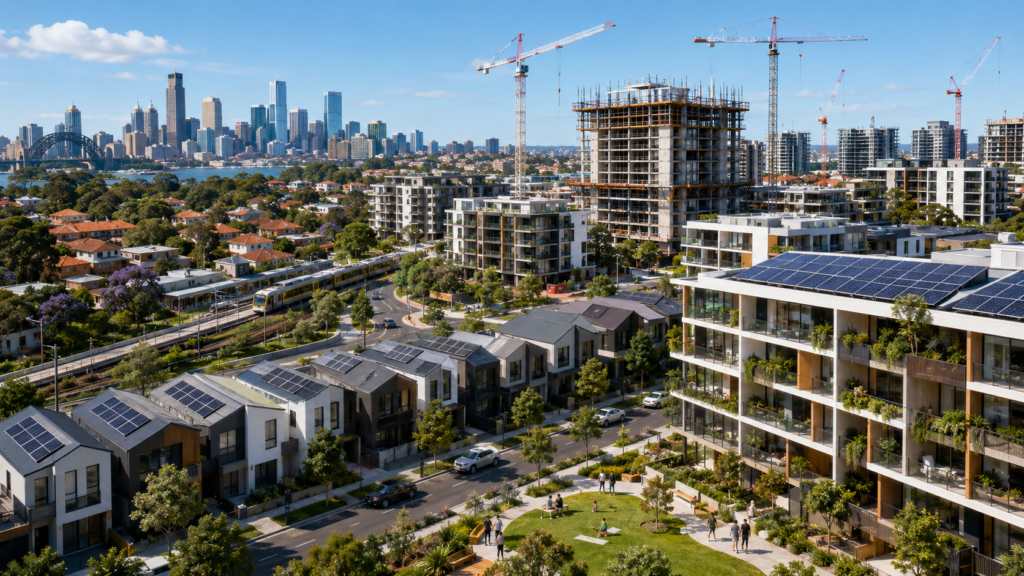
Property companies in Australia are operating in a market shaped by rapid change. Housing demand remains high in many parts of the country, yet developers must manage rising costs, planning restrictions, financing pressures, and changing consumer expectations. These companies are not only building homes; they are helping determine the future structure of Australian cities and suburbs. Their projects influence affordability, liveability, transport patterns, and the quality of residential communities.
The strongest demand for housing is still found in major urban centers and their surrounding growth corridors. Sydney and Melbourne continue to be large and influential markets, while Brisbane, Perth, and Adelaide have become increasingly important for buyers and investors seeking better value and lifestyle opportunities. Many households want homes located near employment areas, public transport, schools, retail centers, parks, and healthcare services. Property companies therefore place significant importance on location analysis before acquiring land or launching a development.
One of the biggest issues facing the sector is limited housing supply. Australia’s population growth has placed pressure on existing housing stock, especially in rental markets and popular suburbs. However, creating new housing is not simple. Developers face approval delays, infrastructure requirements, community objections, construction cost increases, and shortages of skilled trades. These obstacles can slow down delivery and make finished homes more expensive. For this reason, property companies must be highly strategic about project selection and timing.
The need for more affordable housing has changed the design of many residential developments. Large detached homes remain desirable, but they are not always practical or affordable in high-demand areas. As a result, developers are building more townhouses, apartments, terraces, and mixed-density communities. These housing types can provide more affordable entry points while allowing residents to stay close to jobs and amenities. In many suburbs, medium-density development is becoming an important solution to housing shortages.
Another trend reshaping the market is the growth of rental-focused development. Build-to-rent projects are designed for long-term rental use and are usually held by institutional owners rather than sold to individual investors. These developments often include communal facilities, secure access, maintenance services, and professional management. They appeal to renters who want stability, convenience, and a higher standard of living. For property companies, this model provides a different revenue structure based on recurring rental income.
Sustainable design is also becoming a major competitive factor. Buyers, tenants, governments, and investors are increasingly interested in environmental performance. Property companies are responding by incorporating energy-efficient design, solar systems, water-saving fixtures, better insulation, and green communal areas. In addition to reducing environmental impact, these features can lower household operating costs and improve comfort.
Technology is changing both construction and sales. Developers now use digital design tools, market analytics, virtual inspections, and smart home systems to improve the customer experience and manage projects more efficiently. Some companies are also exploring modular construction to shorten build times and reduce waste.
The Australian housing market presents both pressure and opportunity. Property companies that can manage costs, respond to demographic change, and deliver well-designed housing will remain important players. The most resilient companies will be those that view housing not just as a product, but as part of a broader urban ecosystem.

More Stories
APRA and ASIC Tighten the Screws on Private Credit as Australia’s Non-Bank Lending Sector Hits $200 Billion
Mining and Resources M&A: Australia’s Critical Minerals Attract Record Deal Flow
The Safety Net for Small Business: How ACCI Is Addressing the Mental Health and Financial Pressures of Entrepreneurship