
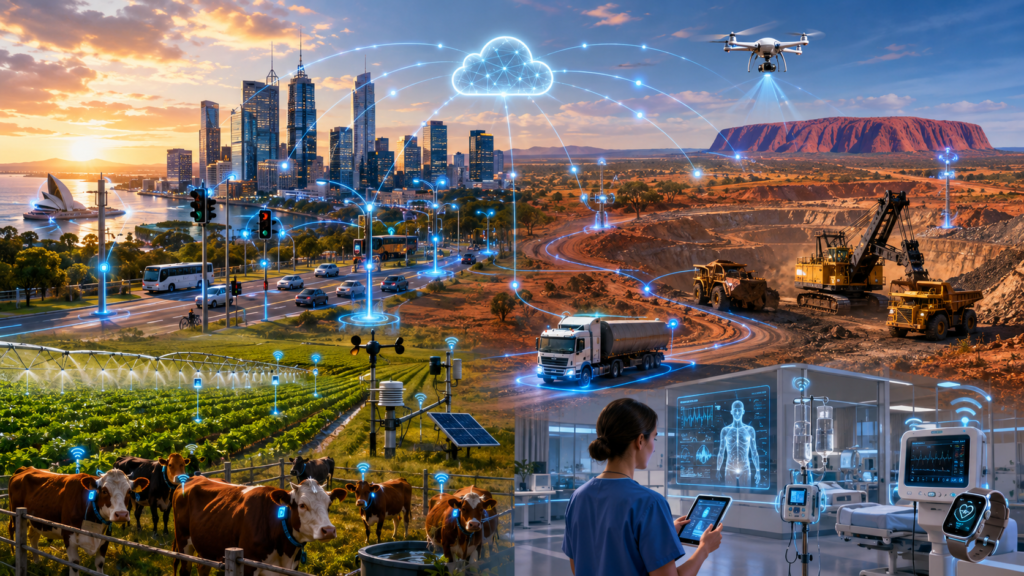
The Internet of Things is becoming an important part of Australia’s digital economy. By linking devices, sensors, machines, and software platforms, IoT allows information to move automatically between the physical and digital worlds. This capability is changing how Australian businesses monitor assets, deliver services, manage risk, and serve customers. As industries become more data-driven, IoT is helping organisations improve connectivity and operate with greater intelligence.
Australia presents a unique environment for IoT development. The country has large cities with growing infrastructure needs, but it also has vast rural and remote regions where many key industries are located. Farms, mines, ports, energy sites, and transport networks often cover large distances. IoT helps bridge these distances by giving businesses real-time access to information from places that may be difficult or costly to inspect manually.
For the agricultural sector, IoT provides practical tools for modern farming. Connected sensors can measure soil moisture, temperature, humidity, and crop conditions. Livestock monitoring devices can track animal location and behaviour, helping farmers identify illness, stress, or unusual movement. Automated irrigation systems can be adjusted based on sensor readings, reducing water waste and improving crop health. These tools are especially valuable in Australia, where climate pressure and water management are ongoing concerns.
Mining and heavy industry also benefit from IoT-based systems. Equipment used in mines, ports, and processing facilities can be fitted with sensors that collect performance data. This allows operators to detect mechanical issues before they cause breakdowns. In high-cost industries, avoiding downtime is extremely important. IoT can also improve safety by monitoring air quality, temperature, vehicle movement, and worker location in challenging environments. These insights help managers respond faster to risks and maintain safer worksites.
In cities, IoT supports the growth of smart infrastructure. Connected traffic systems can help manage congestion, while smart lighting can reduce energy use by adjusting brightness based on movement or time of day. Water utilities can use sensors to detect leaks, monitor pressure, and reduce losses. Waste collection services can become more efficient when bins signal that they are full. These applications show how IoT can improve public services while helping governments use resources more responsibly.
Businesses across retail, logistics, healthcare, and energy are also adopting IoT to improve performance. Retailers can track inventory in real time and maintain better control over refrigerated goods. Logistics providers can monitor delivery vehicles, cargo location, and transport conditions. Healthcare providers can use connected devices to support remote monitoring, particularly for older people or patients who live far from medical facilities. Energy companies can use smart meters and connected grid technologies to manage demand and support renewable energy integration.
The value of IoT comes not only from collecting data but from turning that data into useful action. When IoT is combined with analytics, artificial intelligence, and cloud platforms, businesses can identify patterns, predict problems, and automate decisions. This can lead to lower costs, better customer experiences, improved safety, and new revenue opportunities.
However, successful IoT implementation requires planning. Organisations must consider cybersecurity, privacy, network reliability, and integration with existing systems. A poorly secured IoT device can create a serious vulnerability. Businesses also need clear goals so they do not collect large amounts of data without knowing how to use it.
The development of IoT in Australia reflects a wider movement toward smarter, connected business systems. As technology becomes more affordable and networks become stronger, IoT will continue to support productivity, innovation, and better decision-making across the country.
More Stories
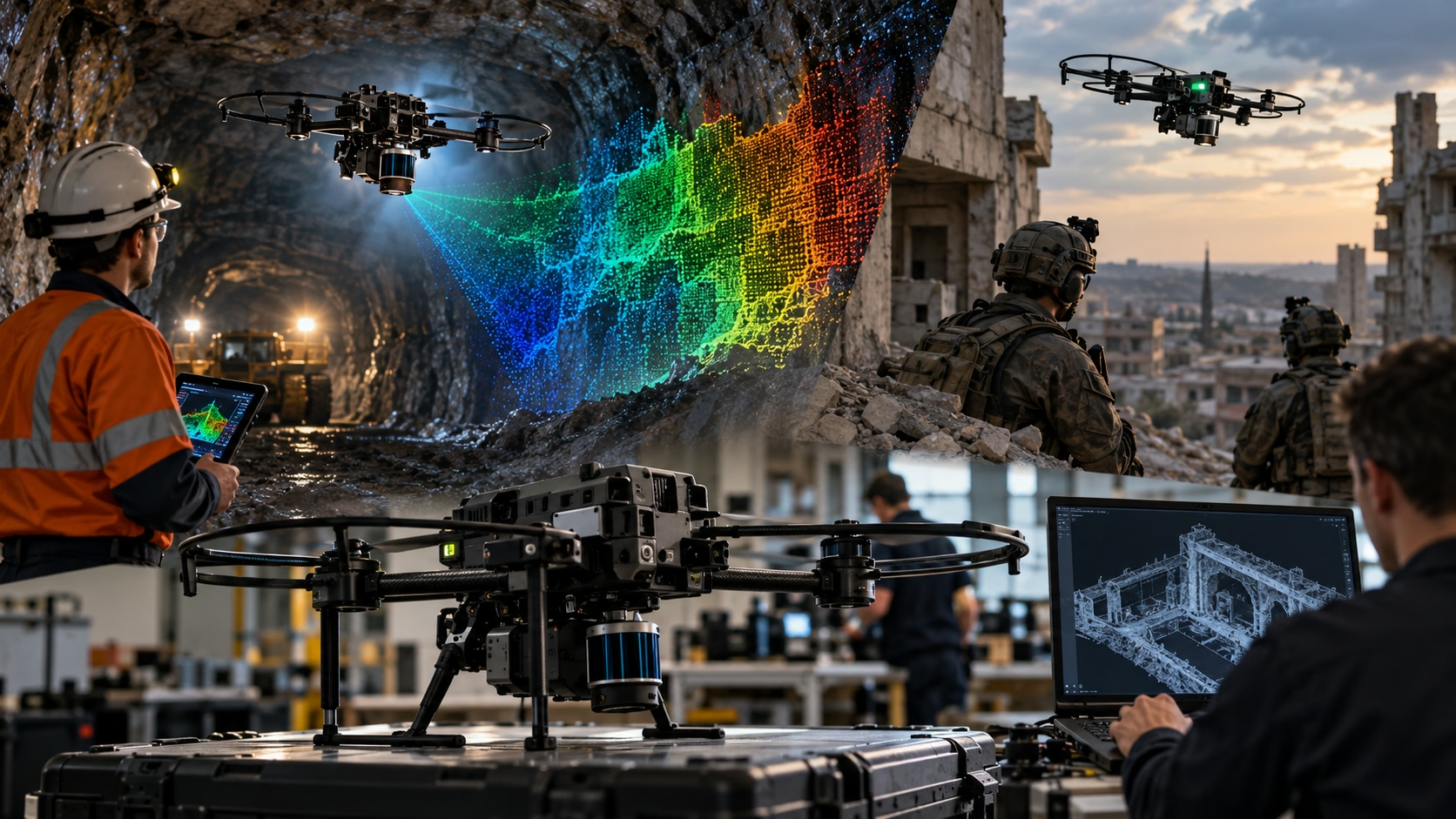
From Mine Sites to Battlefields: How CSIRO Spinout Emesent Is Rewriting GPS-Denied Reconnaissance
Government Policy and the Architecture of Australia’s Deep Tech Future
VR Startups Transform Australian Aged Care and Healthcare Training with Immersive Technology