
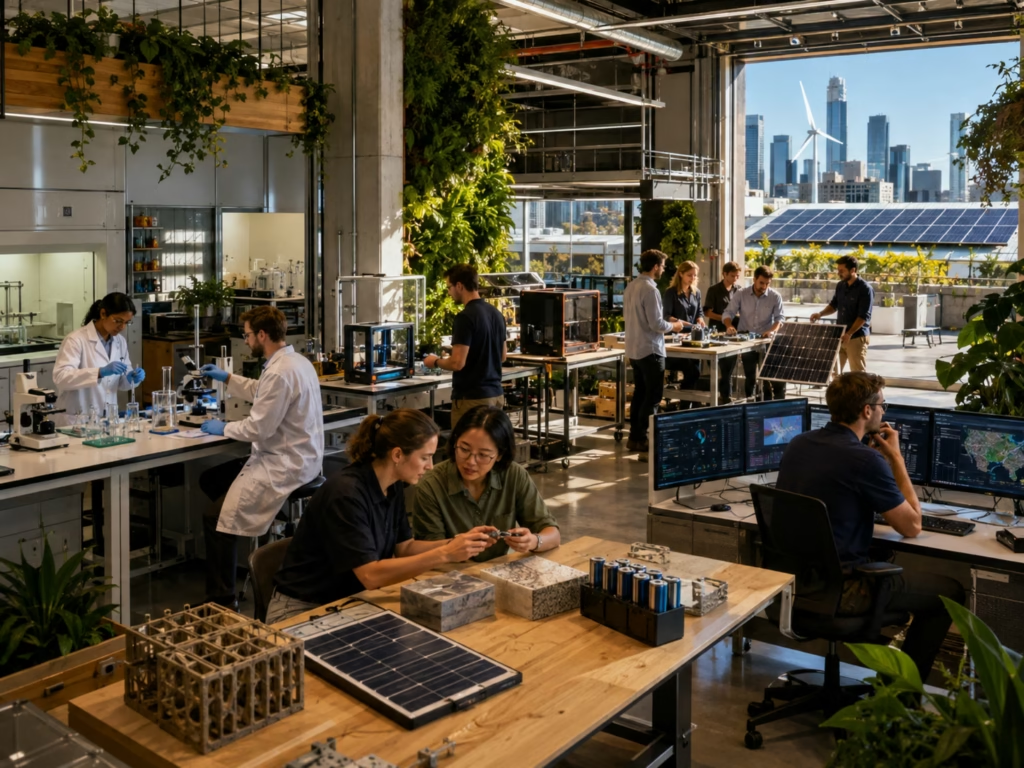
As the global economy pivots toward decarbonization, Australia finds itself in a unique position—a country rich in renewable energy resources and critical minerals. However, translating this natural advantage into a booming Climate Tech sector requires more than just funding; it requires specialized infrastructure. A new breed of niche coworking spaces is emerging across the continent, specifically designed to support the unique logistical demands of deep tech and sustainability startups, moving far beyond the realm of laptops and coffee machines.
The Wet Lab and Hardware Gap
The most significant barrier for early-stage Climate Tech founders is the lack of access to physical infrastructure. A software startup needs a desk; a biotech or advanced manufacturing startup needs a wet lab, a fume hood, and 3D printing facilities. Traditionally, the cost of building such facilities has been prohibitive, forcing founders to outsource research offshore.
Niche coworking operators in Melbourne and Adelaide are solving this by creating shared “wet lab” environments. These spaces allow multiple climate-focused startups to share high-cost equipment and laboratory infrastructure under a membership model. This approach significantly reduces the capital expenditure required to start a deep tech company, democratizing access to innovation. It allows a founder to go from a concept to a physical prototype without securing a multi-million dollar Series A round for equipment alone.
The Circular Economy in Practice
These specialized hubs often practice what they preach. Many of the new Climate Tech coworking spaces in Sydney are constructed using recycled materials and operate on carbon-neutral energy grids. This physical environment serves as a constant source of inspiration and a testing ground for the products being developed inside.
For example, a startup developing smart grid software can beta-test its technology on the building itself. A company creating sustainable building materials can use the workspace as a showroom. This integration of product and place creates a powerful feedback loop that generic office towers cannot replicate. It embeds the startups in a living laboratory, accelerating the iterative design process that is critical for hardware success.
Collaboration Over Competition
The climate crisis demands a collaborative approach rarely seen in the cutthroat world of tech. Niche coworking spaces foster this by curating tenants who complement each other. A solar panel efficiency startup might share a space with a battery storage company and a grid management software firm.
This clustering effect, or “Innovation Density,” allows for rapid problem-solving. If a battery startup needs to test how their cells perform with a specific inverter, they can walk across the hall. This physical proximity builds trust and speeds up the R&D cycle, creating a micro-economy of sustainability that is greater than the sum of its parts. These spaces are not just offices; they are the industrial workshops of Australia’s clean energy future.

More Stories
Mapping Australia’s Robotics Startup Hubs: Brisbane, Perth and Sydney Lead the Automation Charge
Australia’s Property Management Tech Boom: How Proptech Startups Are Modernising Rentals and Tenant Experience in 2026
Robotic Farmhands: How Australian AgTech Startups Are Redefining Field Operations in 2026