
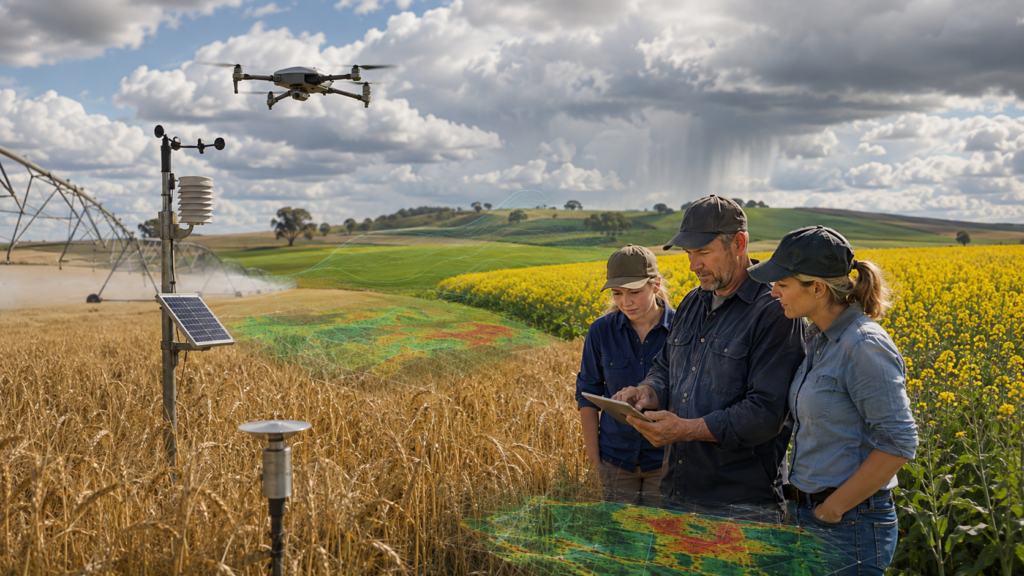
The Rise of Autonomous Farming Down Under
Australia’s vast cropping belts and chronic labour shortages have turned the country into a living laboratory for agricultural robotics. By 2026, a cluster of homegrown startups is no longer just trialling prototypes – they are deploying commercial fleets of autonomous machines that weed, spray, and harvest with minimal human input. The catalyst? A perfect storm of rising input costs, post-pandemic workforce gaps, and maturing sensor technology.
The 2026 Australian Farm Robotics Market Report by AgriFutures Australia confirms the scale of this shift. The report notes that venture capital flowing into ag-robotics topped AUD 480 million this year, a 40% jump since 2023, and that over 1,200 autonomous units are now operational across grain, horticulture, and viticulture properties. (https://www.agrifutures.com.au/)
Startups Leading the Charge
At the forefront is SwarmFarm Robotics, a Queensland-based company that began as a small family farm project. Its signature autonomous platform, the SwarmBot, operates as a modular carrier that can be fitted with precision sprayers, mechanical weeders, or mowers. In early 2026, SwarmFarm sealed a commercial partnership with Elders Rural Services, making its “robot-as-a-service” model available to growers across eastern Australia for as little as AUD 12 per hectare. The machines use LIDAR, stereo cameras, and AI-driven weed identification to apply herbicides only where needed, slashing chemical use by up to 90% in trial paddocks.
Another standout is Agerris, a spin-out from the Australian Centre for Field Robotics at the University of Sydney. Its Digital Farmhand robot focuses on vegetable farms, autonomously mapping rows, detecting pests, and even spot-spraying individual plants. Agerris’s 2026 pivot from pure hardware to a data platform – where each robot feeds a real-time digital twin of the farm – has drawn interest from horticulture heavyweights including Costa Group, which now runs a fleet of 30 units in its tomato glasshouses.
Real-World Impact and Economic Sense
For broadacre farmers, the economics are compelling. A single SwarmBot replacing a 150-horsepower tractor can save upwards of AUD 45,000 per year in fuel and labour, while also reducing soil compaction. In horticulture, Agerris’s robots are addressing a sector that lost 20% of its seasonal workforce during the pandemic and never fully recovered.
Beyond the field, the regulatory environment has kept pace. Australia’s National Heavy Vehicle Regulator and state farming bodies collaborated to create a dedicated code of practice for autonomous agricultural vehicles, allowing on-road movement between paddocks without escort vehicles – a world-first framework finalised in late 2025. This legal certainty has accelerated investment, with international funds like Temasek and Horizons Ventures joining Series B rounds.
The Road Ahead
The 2026 landscape shows that Australian ag-robotics startups are moving beyond the “cool technology” label and into core farm management. With satellite connectivity through Starlink and NBN’s Sky Muster, even the most remote stations can orchestrate fleets from a smartphone. While full harvest autonomy is still on the horizon, weeding, spraying, and scouting are now firmly in the hands of robots – freeing growers to focus on strategy rather than seat time.

More Stories
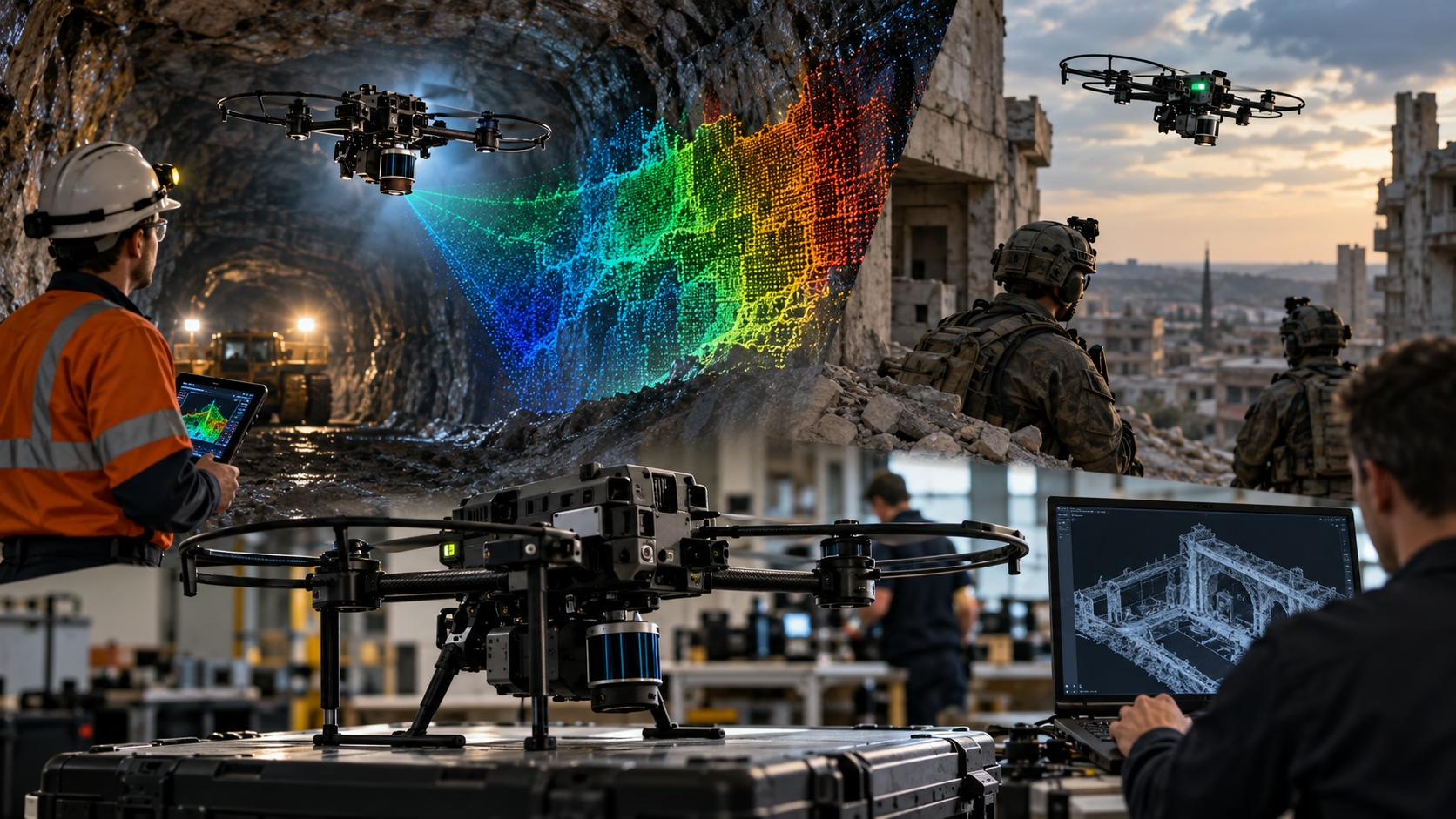
From Mine Sites to Battlefields: How CSIRO Spinout Emesent Is Rewriting GPS-Denied Reconnaissance
Government Policy and the Architecture of Australia’s Deep Tech Future
VR Startups Transform Australian Aged Care and Healthcare Training with Immersive Technology