
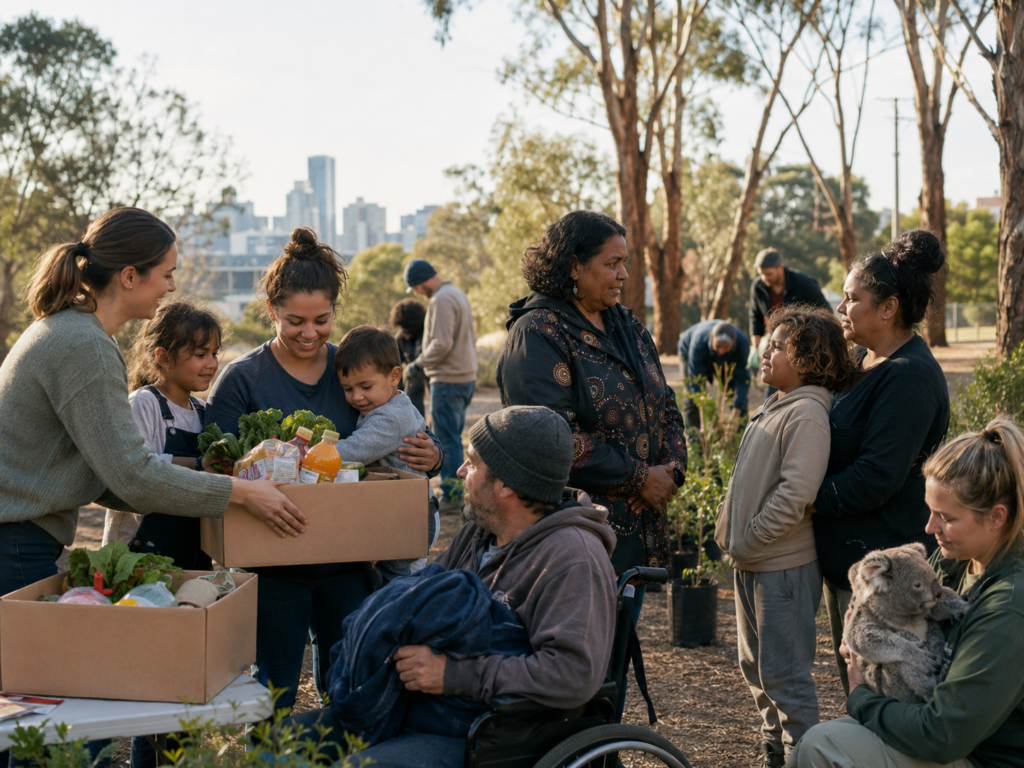
Australia is often viewed as a wealthy and stable country, but many communities still face serious social and environmental challenges. Issues such as homelessness, mental health struggles, domestic violence, poverty, Indigenous disadvantage, refugee settlement, biodiversity loss, and climate-related disasters require more than government action alone. Social organizations in Australia play an important role in filling service gaps, advocating for vulnerable groups, and building stronger, more sustainable communities.
Social organizations in Australia include charities, non-profit groups, Indigenous-led community organizations, faith-based services, environmental movements, social enterprises, and volunteer networks. Their work is wide-ranging. Some provide direct support, such as food relief, emergency accommodation, legal advice, counseling, or employment training. Others focus on long-term change by influencing public policy, educating communities, or protecting natural ecosystems.
One major area of social action is poverty and housing insecurity. In cities such as Sydney, Melbourne, and Brisbane, rising living costs and housing shortages have increased pressure on low-income families, young people, older Australians, and people escaping violence. Organizations that provide homelessness services often do more than offer temporary shelter. They may help people access healthcare, reconnect with family, find stable employment, or apply for long-term housing. This approach recognizes that homelessness is rarely caused by one problem; it is often connected to trauma, unemployment, mental illness, or systemic disadvantage.
Another important sector is Indigenous community support. Aboriginal and Torres Strait Islander organizations are especially significant because they are led by the communities they serve. These organizations may provide healthcare, youth programs, cultural education, family support, language preservation, and legal assistance. Their work is not only about service delivery but also about self-determination. By combining professional support with cultural knowledge, Indigenous-led organizations can respond to community needs in ways that mainstream institutions may not fully understand.
Environmental organizations also have a strong presence in Australia, partly because the country faces unique ecological pressures. Bushfires, droughts, coral bleaching, deforestation, plastic pollution, and threats to native wildlife have made environmental protection a national concern. Many organizations work to restore habitats, protect endangered species, reduce waste, and encourage renewable energy. Some focus on public awareness campaigns, while others organize tree planting, beach clean-ups, wildlife rescue, or legal advocacy for stronger environmental laws.
Climate change has also created a connection between social justice and environmental action. Extreme weather events often affect disadvantaged communities the most. People with limited income, poor housing, disability, or health problems may find it harder to recover from floods, heatwaves, and bushfires. For this reason, many Australian social organizations now use a combined approach: they address immediate human needs while also promoting climate resilience. For example, community groups may help disaster-affected families while also advocating for better emergency planning and sustainable land management.
Volunteering is another key strength of Australia’s social sector. Volunteers support food banks, wildlife shelters, community gardens, aged-care visits, crisis helplines, and local environmental projects. This participation builds social connection and helps organizations reach more people. However, relying heavily on volunteers can also create challenges, especially when demand for services increases faster than funding.
Funding remains one of the biggest difficulties for social organizations. Many depend on donations, grants, partnerships, and government contracts. Short-term funding can make it difficult to plan long-term programs or retain skilled workers. At the same time, organizations must prove their impact through reports, data, and measurable outcomes. While accountability is important, excessive administrative pressure can reduce the time available for direct community work.
Despite these challenges, social organizations remain essential to Australia’s future. They respond quickly to crises, represent voices that are often ignored, and encourage people to take responsibility for their communities and environment. Their value lies not only in solving immediate problems but also in creating a more inclusive, compassionate, and sustainable society.

More Stories
APRA and ASIC Tighten the Screws on Private Credit as Australia’s Non-Bank Lending Sector Hits $200 Billion
Mining and Resources M&A: Australia’s Critical Minerals Attract Record Deal Flow
The Safety Net for Small Business: How ACCI Is Addressing the Mental Health and Financial Pressures of Entrepreneurship