
Soft Plastics Get a Second Life in Australian Manufacturing
In March 2026, seven million Nestlé KitKat wrappers were manufactured using locally produced recycled polypropylene derived from soft plastics pyrolysis oil. The project, led by Viva Energy Australia at its Geelong Refinery, represents a proof-of-concept for large-scale soft plastics processing. What makes this achievement particularly significant is that every stage of production—from refining and polymer manufacturing to packaging conversion—was completed within Victoria, demonstrating the viability of a local circular supply chain.
The Refinery Advantage: Leveraging Existing Infrastructure
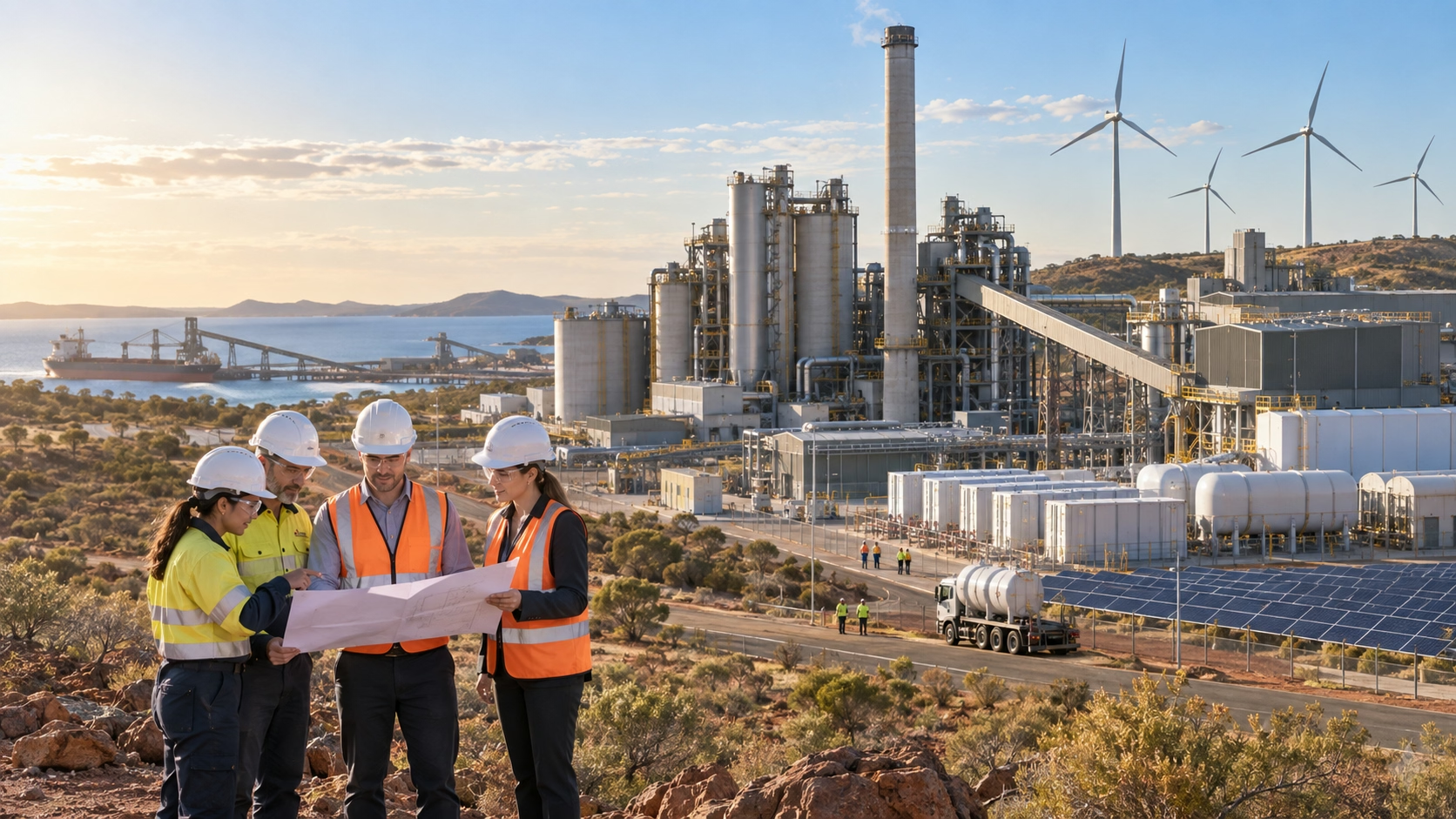
Viva Energy’s Geelong Refinery is Australia’s only manufacturer of polypropylene. By proving that soft plastics pyrolysis oil can substitute for conventional feedstock, the project demonstrates how existing industrial infrastructure can be repurposed for circular economy applications. Bill Patterson, Executive General Manager of Energy & Infrastructure at Viva Energy, noted that with the right policy settings for collection and processing, the refinery could process significantly more material.
Carbon Utilisation: A New Industrial Frontier
Parallel innovation is occurring in carbon utilisation. In June 2026, Orica and MCi Carbon opened Australia’s first carbon utilisation facility in Kooragang Island, New South Wales. This facility captures carbon emissions and converts them into valuable products, creating a revenue stream from what was previously a waste stream. For entrepreneurs in the industrial sector, this represents a new model for managing emissions while generating economic value.
The Business Case for Circularity
Nestlé’s Andrew Lawrey articulated the strategic rationale: “Soft plastic should be treated as a key material, not a waste stream. Building local circular capability will strengthen supply resilience, support manufacturing, and keep valuable materials in the Australian economy”. This perspective reframes waste management from a cost centre to a value creation opportunity—a shift that opens new business models for startups and established firms alike.
Infrastructure Gap and Policy Momentum
While the Viva Energy project proves technical feasibility, broader adoption requires collection and sorting infrastructure that currently lags behind processing capability. Soft Plastic Stewardship Australia has noted that the emerging recycling infrastructure is ready to process significantly more material. For entrepreneurs, this infrastructure gap represents both a challenge and an opportunity: building the collection, sorting, and logistics networks that will feed these processing facilities.

More Stories
From Competition to Co-opetition: How Sydney’s Suburban Hubs Are Redefining Australian Entrepreneurship
The “Fair Go” Factor: How Egalitarianism Drives Australian Team Performance
Bush Tucker Boom: The Rise of Indigenous Ingredients on Modern Australian Menus in 2026